Ah, volume eating. Eating a lot and still reaching your goals? I'm in. If you're anything like me, the words "more food" are basically a love language.
Before you start picturing mountains of pizza and ice cream, though, let me bring you back to reality. Volume eating does mean eating more, but it's built on some pretty sensible nutrition principles. Let's break it down.
What is volume eating?
Volume eating means building your meals around foods that give you a lot of food for not a lot of energy (this is called low energy density, which just means fewer calories per bite). Think big salads, piles of roasted veggies, soups and lean protein. You get a full plate and a full belly, for fewer calories than a smaller plate of more energy-dense food.
It's not a diet with rules. It's a way of putting meals together that helps you feel satisfied while you work towards a goal, whether that's weight loss or just feeling better about what you eat.
Why does it work?
Overly restrictive diets that leave you hangry are hard to stick with (cough cough, lemon cleanses). Volume eating works with your hunger, not against it.
Part of how full you feel comes down to the amount of food you eat, not just the calories in it. Your stomach has stretch receptors (sensors that tell your brain how full it is), and foods with lots of water and fibre, like vegetables, fruit and soups, take up more space, take longer to eat and leave your stomach more slowly. All of that helps you feel fuller (Rolls, 2017). In one study, people who ate a big, low-energy salad before their pasta ate about 12% less energy across the whole meal, without being told to eat less (Rolls et al., 2004).
Protein matters here too. It's one of the most filling parts of a meal, and aiming for roughly 25 to 30 g of protein per meal can help with appetite (Leidy et al., 2015).
To be honest about the evidence: the short-term studies are pretty consistent. Longer term, what matters most is whether you can actually stick with it, which is exactly why it needs to be food you enjoy.
What should I eat?
Your volume eating staples are foods that take up a lot of space for not much energy. They're usually higher in water and fibre, full of nutrients and take a bit longer to eat. Think about a home-cooked butter chicken curry loaded with veggies compared with a quick takeaway burger. They might be similar in calories, but the curry has more volume, fibre and nutrients, and it's likely to keep you full for longer.
Veggies: cauliflower, zucchini, spinach, broccoli, capsicum, cucumber, mushrooms, snow peas, kale. They're mostly water and fibre, so they fill you up for very little energy, and they're packed with the vitamins and minerals your body needs. Basically, go wild in the produce aisle.
Fruit: strawberries, watermelon, apples, berries, oranges. You get natural sweetness plus fibre, water and vitamin C, which is great when you want something sweet.
Protein: chicken, turkey, fish, eggs, Greek yoghurt, or plant-based options like tofu and legumes. Protein is the most filling of the three macronutrients (protein, carbs and fat), it helps you keep and build muscle, which really matters if you're eating a bit less, and your body uses more energy digesting it.
Soups: broth-based ones packed with veggies or legumes. Starting a meal with soup has been shown to help people feel full and eat less overall at that meal (Rolls, 2017).
Popcorn: air-popped popcorn is actually a wholegrain, so it brings fibre, and you get a big bowl for not much energy.
What about fats and carbs?
I'm not going to tell you to ditch everything you love. It's not 2003, and we don't need to fear carbs or fats anymore.
Fats like olive oil, nuts, seeds and avocado are good for you, and here's why. They're mostly unsaturated fats, which support heart health, especially when they replace saturated fats like butter. Your body also needs fat to absorb vitamins A, D, E and K, and fat adds flavour and makes meals more satisfying. Nuts, seeds and avocado bring fibre too. The only catch is that fats are energy-dense: fat has about 9 calories per gram, compared with about 4 for protein and carbs. So they're a "yes, in sensible amounts" food, and a little goes a long way.
Carbs? You bet. Carbs are your body's main fuel source, especially for your brain and for your muscles when you move. Wholegrain options like oats, brown rice, wholemeal bread, and potatoes with the skin on also give you fibre for your gut and B vitamins, which help your body turn food into energy. Aim for about a quarter of your plate.
How do I build a volume plate?
Next time you sit down for a meal, try this. No measuring or weighing needed, just eyeball your plate.
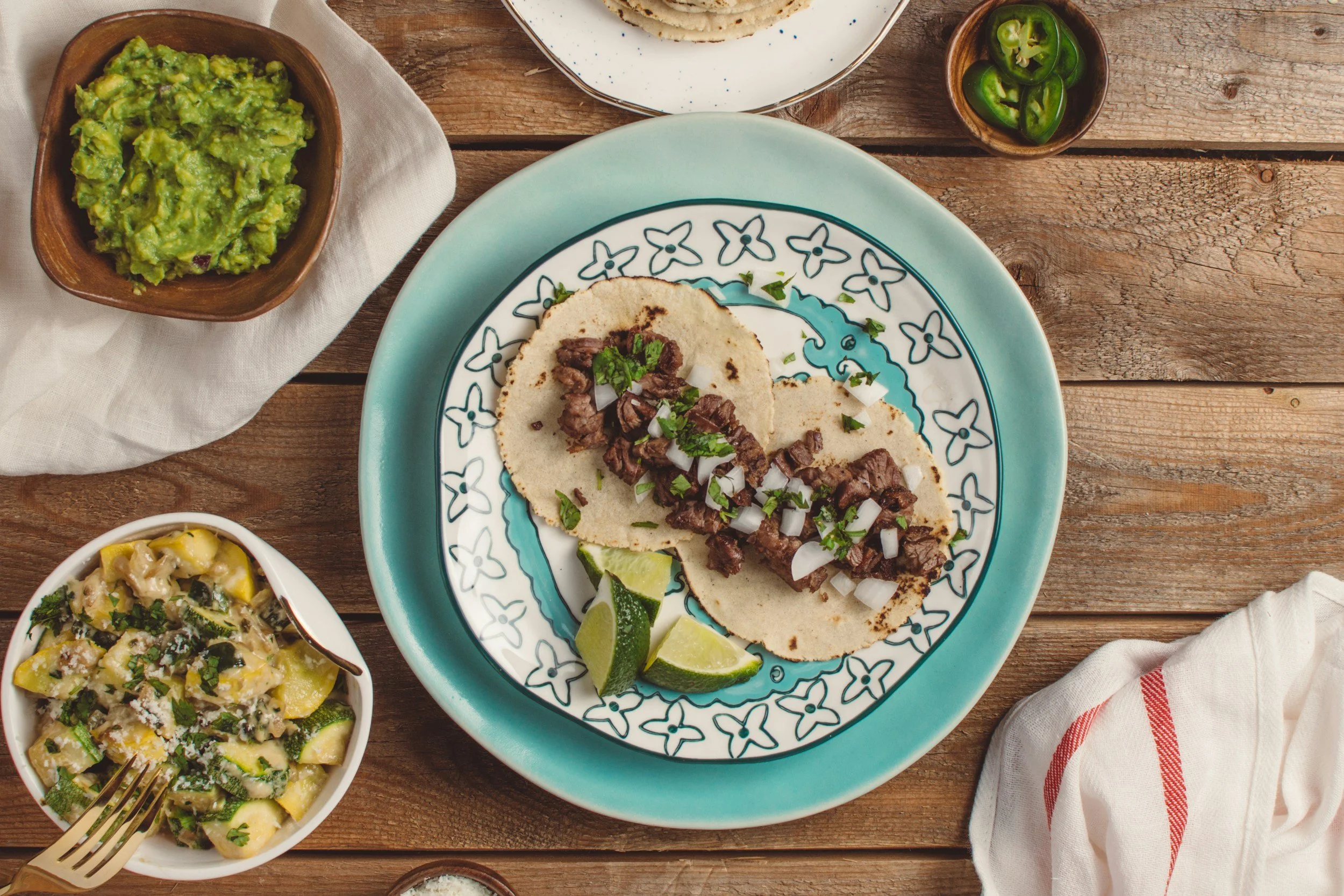
Half your plate veggies or salad. This is where the volume, fibre and nutrients come from. Things like a big handful of salad leaves with cucumber, tomato and capsicum, steamed broccoli and green beans, roasted zucchini, mushrooms and eggplant, a bag of frozen stir-fry veggies, or coleslaw. Sorry potato fans, potatoes sit in the carb quarter for this one.
A quarter protein. This keeps you full for longer and looks after your muscles. Things like a palm-sized piece of chicken, beef, pork or fish, two or three eggs, a tin of tuna, a cup of Greek yoghurt or cottage cheese, or a serve of tofu, tempeh, lentils or chickpeas.
A quarter carbs. This is your energy. Things like a fist-sized serve of rice, pasta or noodles, a medium potato or sweet potato, a slice or two of bread or a wrap, or a small cob of corn.
A little fat for flavour. This makes it taste good and helps you absorb your vitamins. Things like a drizzle of olive oil, a sprinkle of cheese or seeds, a few slices of avocado, or a dollop of pesto or hummus.
Don't love salad? You don't have to eat it. Bulk up the meals you already like instead. Add grated zucchini and carrot to your spag bol, throw a bag of spinach into your curry, mix half cauliflower rice with half normal rice, or add an extra cup of frozen veggies to your stir-fry. Frozen veggies absolutely count. They're snap frozen soon after picking, so they hold onto their nutrients, and they're cheap and quick.
What does a day of volume eating look like?
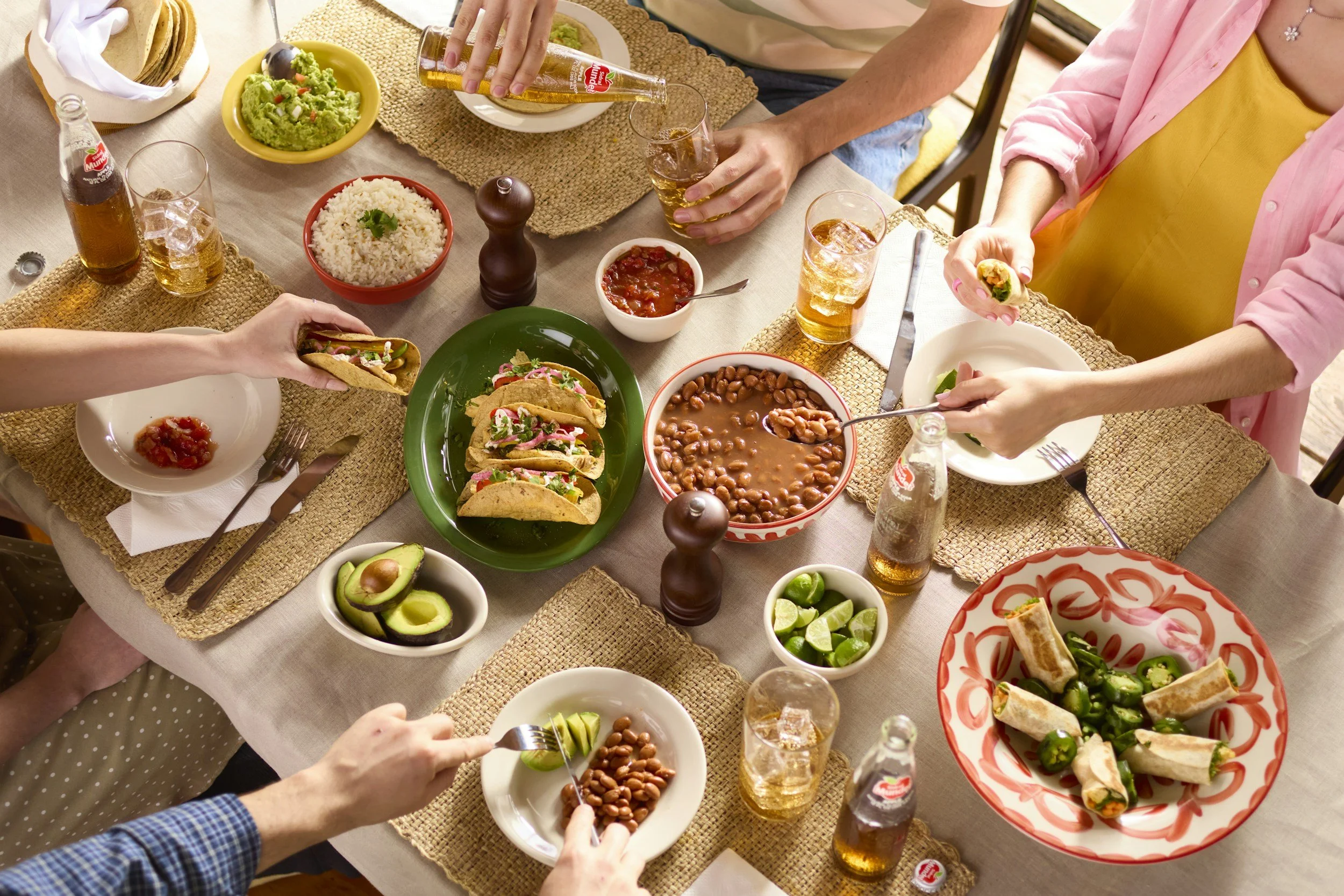
Here's one example. It's not a meal plan, just a picture of what it can look like.
Breakfast: two eggs on toast with a big handful of spinach, mushrooms and tomato. Or Greek yoghurt with a cup of berries and a sprinkle of muesli.
Lunch: a big salad bowl with chicken or tuna, cucumber, capsicum, cherry tomatoes, corn, a scoop of rice and a drizzle of dressing. Or last night's leftovers with a side salad.
Dinner: a stir-fry with beef or tofu and heaps of broccoli, capsicum, snow peas and carrot, with a fist-sized serve of rice.
Snacks: air-popped popcorn, a piece of fruit, veggie sticks with hummus or tzatziki, or a tub of yoghurt.
Changing how you build your plate takes time, so start with one meal a day and build from there. You don't need to get it perfect every meal. Progress, not perfection.
The "too much fibre" warning
If you're not used to piles of veggies, your gut might have a few things to say about it. Cue the bloating and wind. That's because the bacteria in your gut ferment fibre, and that makes gas. The good news is your gut adapts over a few weeks. Ease into it slowly: add a bit more each week, and drink plenty of water, because fibre soaks up water to keep things moving.
Who is volume eating not for?
Volume eating is a tool, not a rule, and it's not right for everyone.
Athletes or very active people with high energy needs, where filling up on veggies can make it hard to eat enough.
Older adults or anyone with a small appetite, or anyone trying not to lose weight.
Anyone with a history of disordered eating, where focusing on low-energy foods may not be helpful.
People with some gut conditions, like IBS, where large amounts of fibre can make symptoms worse.
If any of these sound like you, a dietitian can help you find an approach that fits. And if food or eating feels stressful for you right now, the Butterfly Foundation National Helpline is free and confidential on 1800 33 4673.
The bottom line
Volume eating lets you eat satisfying amounts of real food while you work towards your goals. More veggies, enough protein, carbs and fats in sensible portions, and no need to feel hungry all the time. I do the maths. You get the food.
Ready to stop guessing?
Book a free 15 minute call and we'll work out what fits your life.
References:
Leidy, H. J., Clifton, P. M., Astrup, A., Wycherley, T. P., Westerterp-Plantenga, M. S., Luscombe-Marsh, N. D., Woods, S. C., & Mattes, R. D. (2015). The role of protein in weight loss and maintenance. American Journal of Clinical Nutrition, 101(6), 1320S–1329S. https://doi.org/10.3945/ajcn.114.084038
Rolls, B. J. (2017). Dietary energy density: Applying behavioural science to weight management. Nutrition Bulletin, 42(3), 246–253. https://doi.org/10.1111/nbu.12280
Rolls, B. J., Roe, L. S., & Meengs, J. S. (2004). Salad and satiety: Energy density and portion size of a first-course salad affect energy intake at lunch. Journal of the American Dietetic Association, 104(10), 1570–1576. https://doi.org/10.1016/j.jada.2004.07.001